|

Model: LP-12
Please Call for the best Price
Medtronic Physio-control
LIFEPAK® 12
FREE Accessories
Buy/More Info |

Model: LP-15
Please Call for the best Price
Medtronic Physio-control
LIFEPAK® 15
FREE Accessories
Buy/More Info |

Model: LP-20
Please Call for the best Price
Medtronic Physio-control
LIFEPAK® 20
FREE Accessories
Buy/More Info |

Model: LP-20e
Please Call for the best Price
Medtronic Physio-control
LIFEPAK® 20e
FREE Accessories
Buy/More Info |
What Is an AED
:
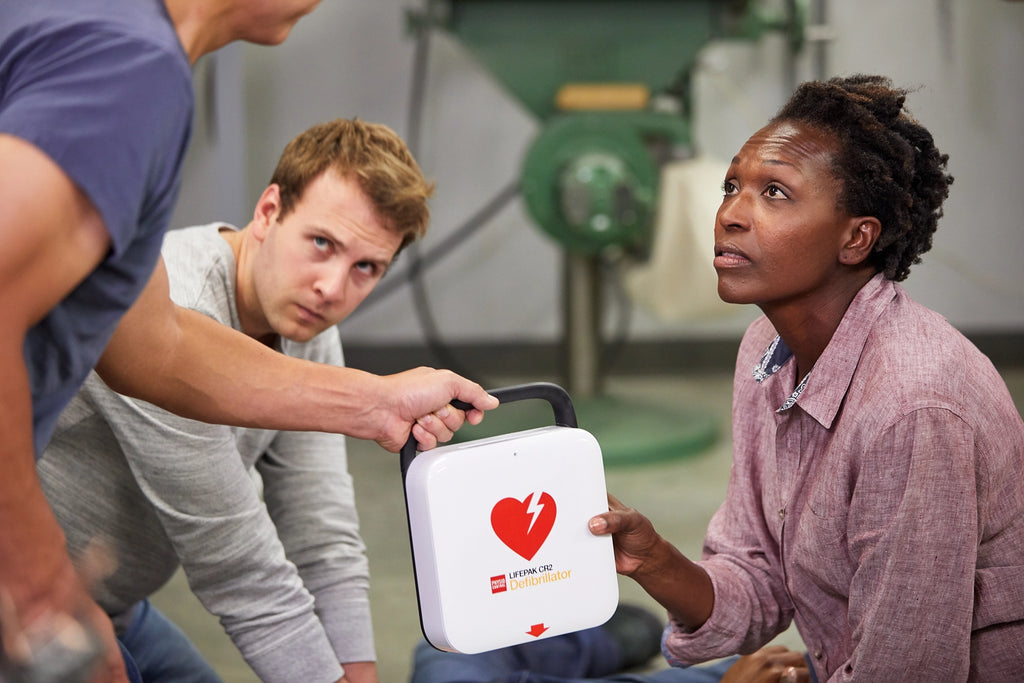
An AED is Automated External Defibrillator that evaluates
the
Sudden-Cardiac-Arrest
victim’s heart rhythm with AED electrodes and is capable of
delivering an electrical shock to the heart to restore the
electrical activity so it can pump blood again. AEDs are
part of all first responders medical equipment. AEDs are
lightweight, battery-operated, portable devices that are
easy to use. Each unit comes with instructions, and the
device will even give you voice prompts to let you know if
and when you should send a shock to the heart. Learning how
to use an AED and taking a CPR course are helpful. However,
if trained personnel aren't available, untrained people also
can use an AED to help save someone's life. All AEDs come
with a minimum factory warranty of 5-years and some AEDs
carry a warranty of 10-years. You often find AEDs in
places with many people, such as shopping malls, golf
courses, businesses, airports, airplanes, casinos,
convention centers, hotels, sports venues, and schools. Home AED
Eighty percent of
the people have SCA in or around home. Most do not survive. So a Home AED makes sense. It is
inexpensive and a lay person can use it. We highly recommend
you should have one. Rapid treatment of SCA with an AED
can be lifesaving.
Why AEDs
are important: AEDs make it possible for more people to
respond to a medical emergency where
defibrillation is required. Because AEDs are
portable and can be used by nonmedical
people, they can be made part of emergency
response programs that also include rapid use
of 9-1-1 and prompt delivery of CPR. All three of
these activities are critical to improving survival
from cardiac arrest.
How AEDS
Work: AED’s
intricate yet rugged mechanism
analyzes and looks for shock-able heart
rhythms, advises the rescuer of the need for defibrillation
and delivers a shock if needed.
A built-in computer checks a victim’s heart
rhythm through adhesive electrodes. The
computer calculates whether defibrillation is
needed. If it is, a recorded voice tells the rescuer
to press the shock button on the AED. This
shock momentarily stuns the heart and stops
all activity and gives the heart an opportunity to
resume beating effectively. Instructions guide
the user through the process. AEDs advise a
shock only for ventricular fibrillation or another
life-threatening condition called pulseless
ventricular tachycardia.
Who can Use
an AED: The AED is a self-testing, battery-operated
automated external defibrillator device that is portable,
simple to operate and inexpensive. Non-medical personnel such as police, fire
service personnel, flight attendants, security
guards and other lay rescuers who have been
properly trained can use AEDs.
An AED comes in two modes: automatic mode and semi-automatic
mode. In semi-automatic mode, after applying the
AED-electrodes (pads) to the patient’s chest, the AED
analyzes the patient’s electrocardiogram (ECG), and if a
shock to start the heart is needed, the AED advises the
operator to push the button to deliver the shock. For the
Automatic AED, the AED automatically delivers a shock if the
shock is needed.
AEDs are safe to use by anyone who’s been
trained to operate them. Studies have shown
that 90 percent of the time AEDs are able to
detect a rhythm that should be defibrillated.
And 95 percent of the time they are able to
recommend NOT shocking when the computer
shows defibrillation is not indicated. Over
200,000 people in the U.S. die of sudden cardiac arrest every year
before receiving the emergency care. Up to 50,000 of these deaths
could have been prevented if an automated external defibrillator had
been available and someone had initiated immediately the Cardiac
Chain of Survival at the time of the emergency. An AED is the only
device that may save your life during a cardiac arrest. Who would
not want to own an AED that is affordable and can be used by anyone
in case of SCA emergency to save a life? Unlike the defibrillators
seen on medical TV shows, the latest generation of AEDs are small,
lightweight, portable and very easy to operate. They are about the
size of a small laptop notebook and are equipped with two adhesive
electrode pads that rescuers attach to the person's chest
strategically.
Though AEDs are medical devices, yet lay people can be trained to
use these. Most of the AEDs provide prompts, auditory and
visual, to assist
anyone in treating a victim of SCA. When AEDs are used in
conjunction with CPR, they can increase survival rates between 50
and 80 percent. The only effective treatment for SCA is an electrical
shock called defibrillation. Defibrillation is an electrical
current applied to the chest. The electrical current passes through
the heart with the goal of stopping the Ventricular Fibrillation and
giving an opportunity for the heart's normal electrical system to
take control. This current helps the heart reorganize the
electrical activity so it can pump blood again. An automated
external defibrillator – AED –can defibrillate the heart.
AED Professionals provides a
comprehensive AED program that includes AED selection, AED essential
accessories, training and the required medical-oversight. We can
assist in the
selection and purchase
of appropriate
defibrillator
devices,
supplies
and other
defibrillator-related
equipment to meet the unique needs of your site. In
addition, on many defibrillator models we provide Defibrillator
Rebate. As a leader in all brands of AEDs we market, we also offer solutions, tools, and expertise designed to help you establish and maintain a successful AED program. We stock all AED-related accessories: such as replacement batteries,
additional defibrillation pads, AED carrying cases, and other
supplies for immediate shipment. Please do not forget to maintain
your AED properly.
AED Professionals also stocks AED training units that enable AED
responders to practice first-responder medical emergency scenarios
without the cost of a fully functional AED device and without taking
an AED unit out of service.
Our parent Company, General Medical Devices, Inc. provides, cardio
resuscitation products, products relating to medical imaging,
medical diagnostics, patient monitoring and emergency care systems.

All
our products are backed by a
30-day money back guarantee. This 30-day window gives you the
comfort of knowing that your order is backed by a Money Back
Guarantee. We strive to earn our customers' respect, repeat
business and referrals, everyday.
Do you need Medical Direction and oversight for
your AED Program?
..
All 50 states require the
routine maintenance of AED devices according to manufacturer
warranties in order for their indemnification provision to be
extended to acquirers. It’s important to maintain your AED/CPR training and comply with State and Federal AED laws and regulations.
En-Pro and PlusTrac provide you complete medical direction and online maintenance tracking program.
PlusTrac provides complete medical leadership while minimizing the cost and the administrative burden of managing your AED program. Regardless of the size of your program, En-Pro can assist you with:
Annual Medical Prescription/Authorization
EMS Registration/Notification
Policy and Procedure Manual
Site Analysis with an En-Pro Account Manager to Optimally Place AED Devices
Event Review and Documentation by an En-Pro Medical Director when AED is used
Coverage Under $1,000,000+ General Liability Policy.
AED - Automated External Defibrillator Products
and Services:
Over 200,000 people in
the U.S. die of sudden cardiac arrest every year before
receiving the emergency care. Up
to 50,000 of these deaths could have been prevented if an
AED - automated external defibrillator ( AED ) had been
available and someone had initiated immediately the Cardiac
Chain of Survival at the time of the emergency.
An AED is the only device that may save your life during a cardiac arrest. Who would not want to own an AED that is affordable,
portable and anyone can use it in case of SCA emergency to
save a life? AEDs are medical devices, yet lay people
can be trained to use.
AEDs provide auditory and visual prompts to assist EMS
personnel in treating a victim of SCA. When AEDs are used
in conjunction with CPR, they can increase survival rates
between 50 and 80 percent. AED Professionals provides
a comprehensive AED program that includes AED selection, AED
essential accessories, training and the required
medical-oversight. In addition to being carried by police and ambulance crews, AEDs are now commonly available in many public places, including malls, office buildings, sports arenas, golf courses, cruise ships, schools, casinos, airports and airplanes..
AED is an Automated External
Defibrillator, a device that evaluates the Sudden Cardiac
Arrest Victim’s heart rhythm with AED electrodes and
delivers an electrical shock to the heart to restore
the electrical activity so it can pump blood again.
An AED is a device that analyzes and looks for shockable heart
rhythms, advises the rescuer of the need for defibrillation and
delivers a shock if needed.
AED - Automated
External Defibrillator Operation: The AED is a self-testing, battery-operated automated external defibrillator (AED) device that is portable. How to operate is simple. After applying the AED’s
electrodes (pads) to the patient’s chest, the AED
automatically analyzes the patient’s electrocardiogram (ECG)
and advises the operator to push the button if the device is
semi-automatic and deliver a shock if needed. For the
Automatic AED, the AED automatically delivers a shock if
needed. The AED guides the operator through the rescue using
a combination of voice prompts, audible alerts, and visible
indicators, depending on the model you have.
AED: Automated External Defibrillator means a device that:
Is used to administer an electric shock through the chest wall to the heart;
Has built-in computers within the device to assess the patient’s heart rhythm, judge whether defibrillation is needed, and then administer the shock;
Has audible or visual prompts, or both, to guide the user through the process;
Has received approval from the United States Food and Drug Administration of its pre-market modification, filed pursuant to 21 U.S.C. 360 (k);
Is capable of recognizing the presence or absence of ventricular fibrillation and rapid ventricular tachycardia and is capable of determining without intervention by an operator whether defibrillation should be performed; and
Upon determining the defibrillation should be performed, either automatically charges and delivers an electrical impulse to an individual’s heart or charges and delivers an electrical impulse at the command of the operator.
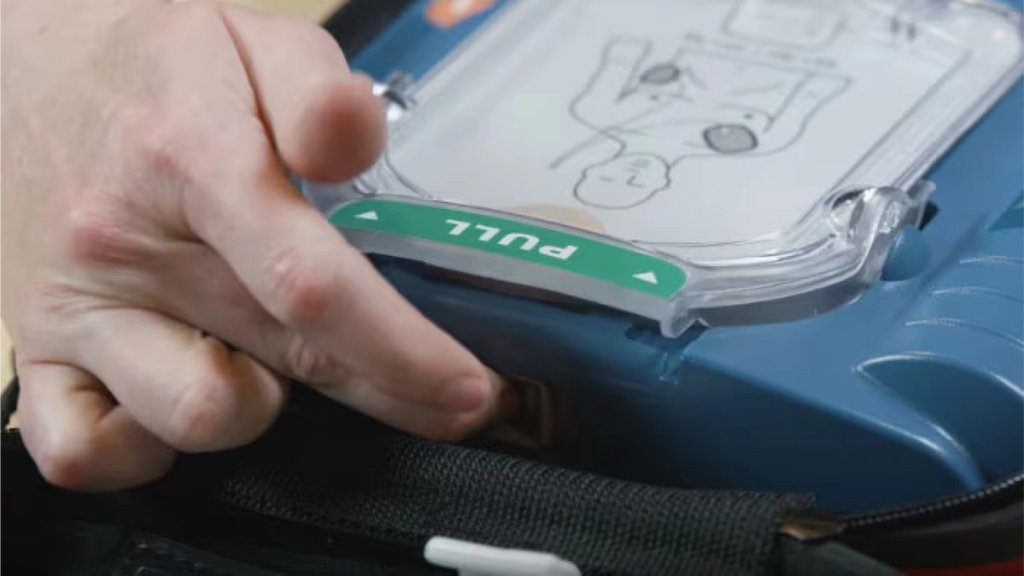
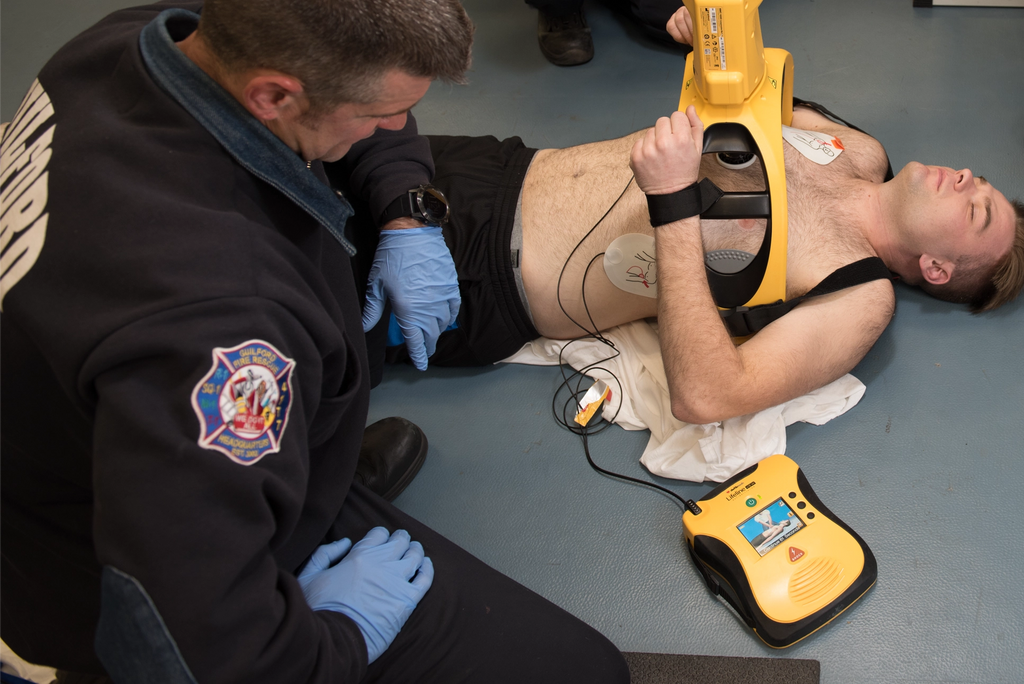
When the
electrode pads are appilied, the Automated
External Defibrillator starts to automatically analyze
the person's ECG rhythm to determine if a shock is required.
It is necessary that no contact be made with the person
while the defibrillator is analyzing the ECG. If the
victim is touched, the ECG may not be accurate.
The only effective treatment for VF is an electrical shock called
defibrillation. Defibrillation is an electrical current applied to
the chest. The electrical current passes through the heart with the
goal of stopping the VF and giving an opportunity for the heart's
normal electrical system to take control. This current helps the
heart reorganize the electrical activity so it can pump blood
again. An automated external
defibrillator (AED) can defibrillate
the heart. If the External
Defibrillator determines that a shock is indicated, it will
automatically deliver the shock or ask the user to press a
button. Once the shock
is delivered, the user is prompted to resume CPR. AED
Professionals recommends site-specific AED programs tailored
to meet the unique and individual needs of your
organization. That includes specific type of AED
model, number and location of AEDs required for optimal
response. AED Professionals also makes recommendation
as to the number of persons to be trained as AED Responders,
designs AED Responder activation systems, and makes
suggestions on how to coordinate the AED program with the
local EMS organizations.
AED Professionals, as
an authorized dealer, can assist in
the
selection and purchase of appropriate
defibrillator device,
supplies and other
defibrillator-related equipment to meet the unique
needs of your site. In addition, on many defibrillator models we
provide $125 Defibrillator
Rebate. We stock all AED-related accessories:
such as replacement batteries, additional defibrillation
pads, AED carrying cases, and other supplies for immediate
shipment. Please do not forget to maintain your AED properly.
As you know each model of AED has some advantage over the
other. For example: One Size Fits All
ZOLL AED’s one-piece electrode design accounts for anatomical variation. Based on extensive human data,
Zoll AED Plus CPR-D-padz meet the anthropometric chest characteristics of 99% of the population. If needed, the lower
(apex) electrode of the Zoll AED Plus can be separated and adjusted to accommodate the remaining 1% of the population.